
Learning English today is easier than ever. With dozens of apps available, you can practice anytime, anywhere — often for free.
But here’s the real question every learner faces:
Do you actually need to pay for English speaking apps, or are free tools enough?
The answer depends on one thing — your goal.
Let’s break it down in a simple, practical way so you don’t waste time or money.
What You Can Achieve with Free Apps
Free English learning apps have improved massively in recent years. Today, you can build a strong foundation without spending a single rupee.
Free tools are great for:
- Learning basic vocabulary
- Understanding grammar rules
- Practicing simple conversations
- Improving pronunciation (to some extent)
Popular Free Options:
- Duolingo — vocabulary & grammar basics
- ChatGPT (free) — conversation + explanations
- HelloTalk / Tandem — language exchange
- YouTube — unlimited lessons
With consistency, these tools can take you from beginner to intermediate level.
Where Free Apps Fall Short
No matter how much time you invest, free apps have a clear limitation.
What free apps cannot provide:
1. Reliable Human Practice
Language exchange apps are inconsistent. People cancel, lose interest, or don’t match your level.
2. Personalized Feedback
AI and peers don’t correct deeply. Your mistakes often go unnoticed.
3. Real Speaking Confidence
Confidence comes from real conversations — not practice alone.
4. Structured Progress Tracking
Free tools don’t track your speaking improvement effectively.
This is where most learners get stuck.
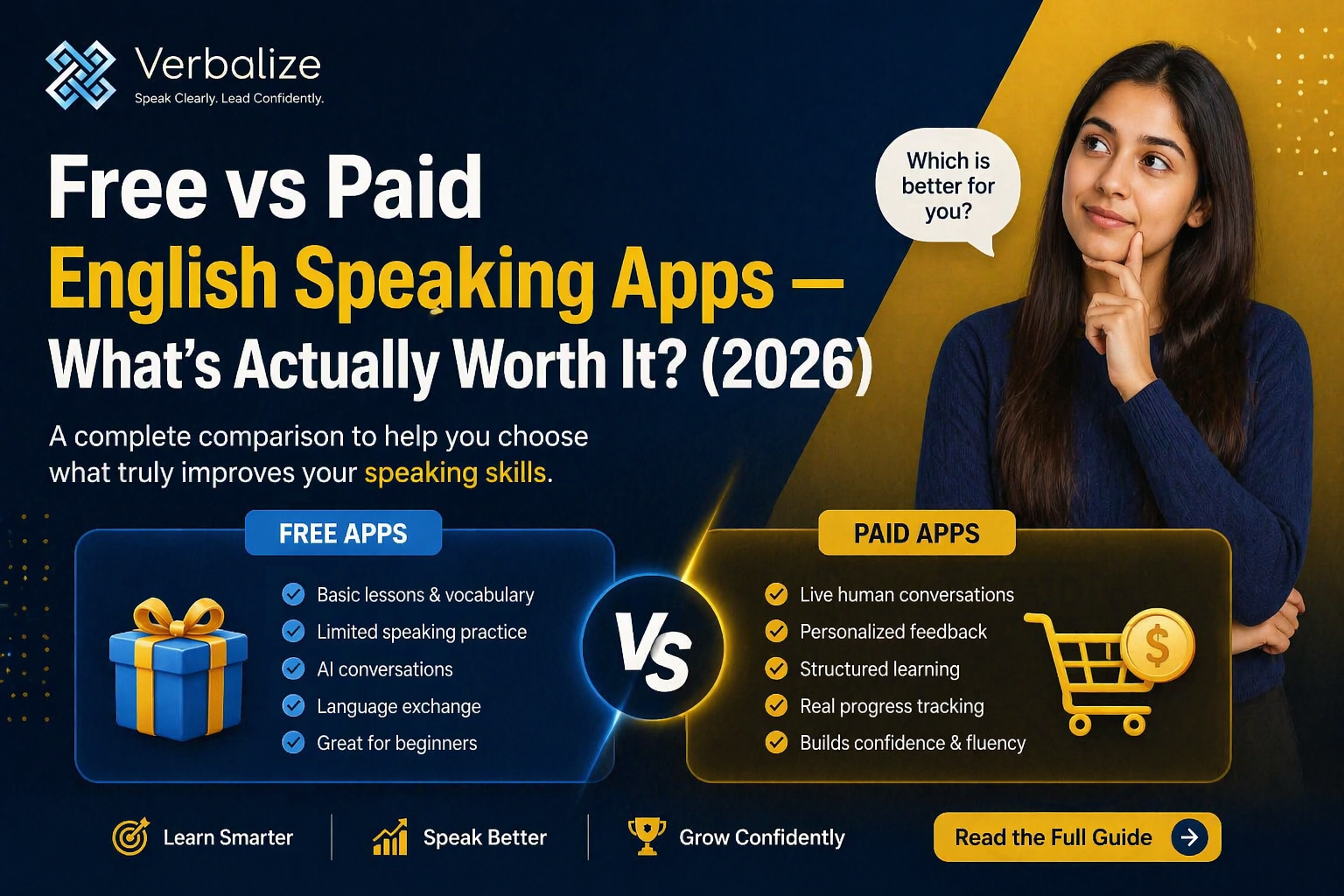
Free vs Paid Apps — The Real Difference
| Goal | Free Apps | Paid Apps |
|---|---|---|
| Learn vocabulary | Yes | Not necessary |
| Understand grammar | Yes | Not necessary |
| Practice pronunciation | Limited | Better |
| Real conversations | Unreliable | Consistent |
| Daily speaking practice | No | Yes |
| Confidence building | No | Yes |
| Interview preparation | No | Yes |
If your goal is learning, free apps are enough.
If your goal is speaking confidently, paid apps become necessary.
What Do Paid Apps Actually Offer?
Paid apps solve one major problem: real human interaction.
What you get:
- Daily speaking practice
- Expert corrections
- Structured sessions
- Faster improvement
- Real-world confidence
Price Range (2026):
- Budget: ₹1,500/year (basic apps)
- Mid-range: ₹2,000–₹5,000/month
- Premium: ₹10,000–₹30,000/month
The key is not the price — it’s value per conversation.
When Free Apps Are Enough
Stick to free tools if:
- You’re a beginner
- You only need basic English
- You’re not under pressure to speak fluently
- You already have someone to practice with daily
In these cases, paid apps are not necessary.
When Paid Apps Are Worth It
Invest in paid tools if:
- You understand English but can’t speak confidently
- You freeze in conversations
- You have interviews, meetings, or exams coming up
- Your career depends on English communication
- You’ve already tried free apps but feel stuck
This is where paid practice gives real results.
The Smart Approach (Best Strategy in 2026)
The most effective learners don’t choose one — they combine both.
Best Combination:
- Free Layer:
Daily vocabulary + grammar (Duolingo, ChatGPT) - Paid Layer:
Daily speaking practice with experts
This balance gives:
- Strong foundation
- Real speaking confidence
- Faster progress
Final Verdict: Free vs Paid — Which Wins?
There is no one-size-fits-all answer.
- Free apps are perfect for learning English
- Paid apps are essential for speaking English confidently
If you’re serious about fluency, you’ll eventually need both.
Final Thought
English is not just about knowing words —
it’s about using them confidently in real conversations.
And that’s something no free app alone can fully teach.